
随着数字化时代的到来,运动智能可穿戴设备作为体育科技与智能制造深度融合的典型代表,正在全方位改变运动训练、健康管理和体育教育的传统模式。市场数据显示,全球智能可穿戴设备市场规模已从2016年的97.94亿美元增长至2023年的230.77亿美元,年复合增长率达17.8%[1]。而在中国市场,仅2024年就预计突破530亿元人民币[1],这些数据彰显了该领域蓬勃的发展态势和巨大的市场潜力。
1 运动智能可穿戴设备概述
1.1 相关概念释义
在智慧体育领域,可穿戴设备、智能可穿戴设备和可穿戴技术构成了一个相互关联的技术生态系统,共同推动运动训练的科学化和个性化发展。可穿戴设备是指能附着在人体上的电子设备,通过内置传感器实现对使用者生理参数、物理参数的实时监测和数据采集,具有便携性强、佩戴灵活等特点[7]。智能可穿戴设备则在此基础上融入了先进的机器学习算法和人工智能技术,不仅能采集数据,还能进行复杂的数据分析和模式识别,为用户提供个性化的反馈和建议[8]。例如,现代智能手表能通过深度学习算法分析运动数据,优化训练计划并预防运动伤害,同时也在不断解决续航能力、数据监测准确度、隐私信息保护等问题[8]。而可穿戴技术是支撑可穿戴设备和智能可穿戴设备发展的核心技术基础,涵盖了从硬件设计到软件开发的整个过程,包括传感器技术、通信技术、数据分析技术等[9]。随着物联网和人工智能技术的快速发展,可穿戴技术的创新推动着设备向更小型化、集成化和智能化方向发展[10]。这三者之间的关系可以概括为:可穿戴技术为可穿戴设备提供技术支撑,智能可穿戴设备则通过融合先进算法和智能技术,在可穿戴设备的基础上实现了更高层次的功能和应用[11]。这种协同发展使得运动智能可穿戴设备在提升运动表现、优化训练方案、促进健康管理等方面发挥着越来越重要的作用,为智慧体育的发展提供了强有力的技术支持。
1.2 运动智能可穿戴设备的工作原理
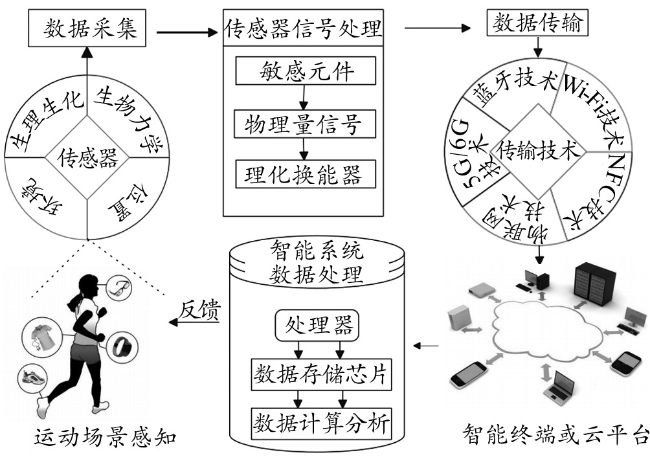
运动智能可穿戴设备的这一工作原理体现了其在运动科学领域的独特优势。其不仅能够实现对运动过程的全面、精准监测,还能通过智能算法对数据进行深度分析,为用户提供个性化的训练指导。这种结合了先进传感技术和人工智能的方法,极大地提升了运动训练的科学性和有效性,为运动员和健身爱好者提供了精准指导和健康管理工具。
1.3 运动智能可穿戴设备的分类
运动智能可穿戴设备的分类方法呈现多元化特征(见图2),反映了该领域的快速发展和应用范围的不断扩大。当前,学术界主要从穿戴部位、功能特性、产品形态、技术特性、应用领域等维度进行划分[18-21]。从穿戴部位来说,可分为手部穿戴、头部穿戴、足部穿戴和身体其他部位穿戴 4大类;从功能角度可分为健康监测类、运动追踪类、定位导航类、训练指导类、安全辅助类5大类;从产品形态角度可分为腕带式、眼镜式、穿戴式、鞋类和配饰类5大类;从应用场景角度可分为户外运动、室内健身和专项运动设备3大类;从技术特性角度可分为交互方式、数据处理和通信方式3大类;从目标用户角度又可分为专业运动员、健身爱好者、普通大众和特殊人群使用的智能可穿戴设备。
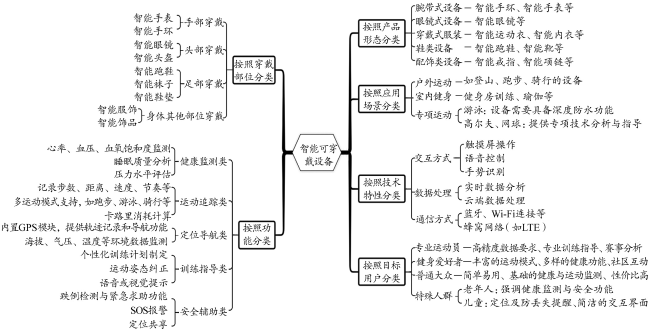
当前,智能可穿戴设备正朝着更加微型化、智能化和多功能化的方向发展,特别是在运动科学领域,运动智能可穿戴设备的研究与运用正在彻底改变传统的训练方法和健康管理模式。通过融合先进的传感技术、人工智能算法和大数据分析技术,运动智能可穿戴设备正在为运动员和健身爱好者提供前所未有的精准指导和全面的健康管理解决方案,推动着智慧体育的快速发展。
2 运动智能可穿戴设备的关键技术
2.1 传感技术
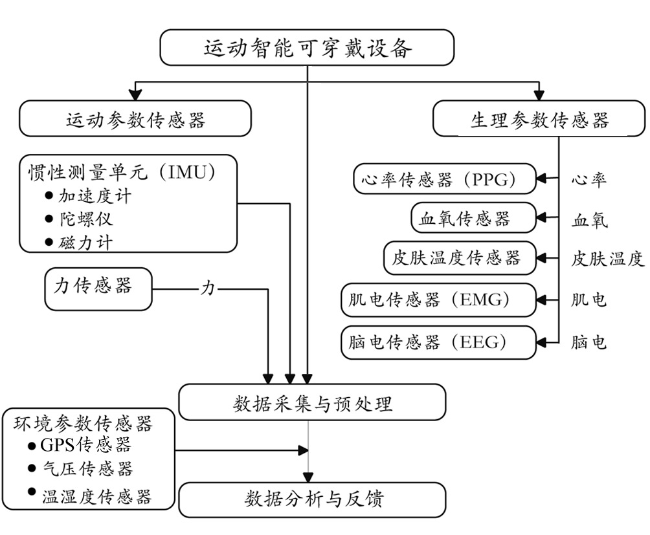
运动智能可穿戴设备作为运动与数字化分析之间的关键纽带,其核心在于精准的传感技术。这些技术不仅能实时监测人体的生理参数、运动状态及环境变量,还能显著提升运动健康监测的精度,推动个性化运动干预和数据驱动的体育科研发展。传感技术的应用领域广泛,主要涵盖运动参数、生理参数及环境参数3个方面(见图3),能从多个维度为运动科学与健康管理提供全面的数据支持。
2.2 人机交互技术
2.3 无线通信与物联网技术
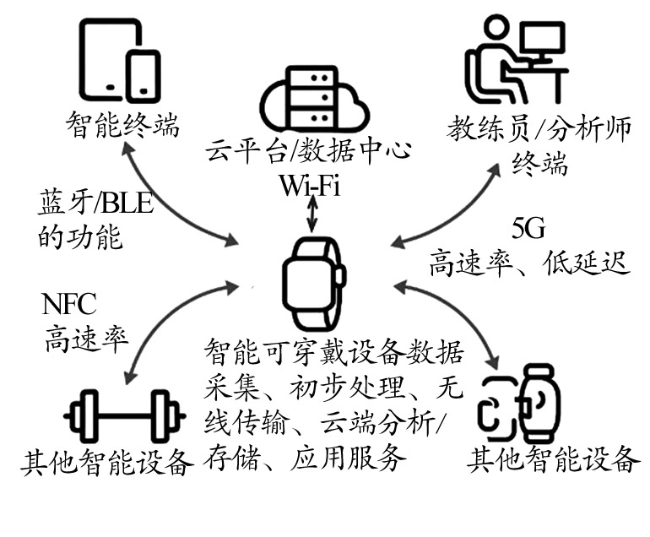
无线通信与物联网技术是运动智能可穿戴设备的核心支撑技术之一,其不仅可实现设备间的互联互通,还能促进数据的实时共享和处理,从而为运动训练和健康监测提供强大支持。以当前的科技发展水平,在无线通信方面,Wi-Fi、蓝牙、NFC、GPS等技术使设备已经能够将采集的数据传输到云端进行分析存储[34](见图4)。例如,通过集成多种传感器的无线传感器网络(WSN),可以实时监测运动员的生理指标,并通过高性能2.4 GHz收发器进行稳定传输[35]。物联网技术则使智能可穿戴设备能与其他智能设备和平台无缝连接,形成统一的数据网络,实现实时数据共享和综合分析[36]。这使得教练员可以通过物联网平台实时获知运动员的各项指标,科学调整训练计划。
2.4 供电与能源管理技术
3 技术突破与创新
3.1 柔性电子技术的应用
当前,随着智能终端技术的快速迭代与普及,以及人们对智能化环境的要求不断提高,高性能柔性传感器已经成为运动智能可穿戴设备中最具应用潜力的核心技术之一,其不仅具备连续映射功能,还拥有灵敏度高、柔韧性好、制造工艺简单等显著优势。这些特性使其在运动员生理指标监测(如体温和脉搏监测)、运动表现评估、运动姿态分析、人机交互等方面体现出广阔的应用前景,已逐步成为可穿戴设备、医疗保健、软式机器人等新兴领域的关键技术支撑[45]。
相较于传统硅基传感器,柔性压力传感器凭借其弹性和柔韧特性,能与人体运动部位的表面实现完美的保形贴合。这种特性使其能在人体运动时的各种曲面状态下持续捕获高质量的压力信号,从而为运动监测和评估提供更为准确和连续的数据支持。尽管不同类型的柔性传感器在工作原理上存在差异,但都具有相似的基本构造,主要由柔性基底、活性材料以及导电电极3个核心部分组成[46]。
从柔性传感器的结构设计来说,弹性基底可以赋予传感器必要的柔性与应变能力,确保其能充分贴合人体运动中产生的不规则表面,实现稳定可靠的压力信号采集。而活性材料构建的导电网络则是决定传感器性能的关键要素,其不仅能使传感结构具有必要的导电性能,更是影响传感器灵敏度的核心因素[47]。这种结构设计使柔性传感器能在运动监测过程中保持稳定的性能输出,为运动训练的精准化和个性化提供有力的技术支持。
目前,在智慧体育领域,柔性电子技术的应用正在不断拓展和深化。通过将柔性传感器集成到运动服装、运动护具等可穿戴设备中,可以实现对运动员训练负荷、技术动作、身体状态的实时监测和评估,为科学训练和伤病预防提供数据支撑。可以预见,这种新型的感知技术必将推动体育训练模式向更加智能化、精准化的方向发展,并为改善运动训练效果和提升竞技水平提供新的技术路径。
3.2 新型材料的研发进展
3.3 人工智能算法的优化与应用
3.4 人机交互的创新体验
为了进一步改善人机交互体验,研究人员正在探索多种创新技术。例如,基于人体姿态识别的智能可穿戴设备可以通过分析运动员的动作来提供即时的纠正和反馈,有助于减少运动伤害并提高训练效率[56]。结合虚拟现实(VR)和增强现实(AR)技术,智能可穿戴设备可以为用户提供沉浸式的训练环境,增强用户的参与感和互动性[57]。此外,通过整合多模态传感器和智能算法,智能可穿戴设备能实现更全面的运动监测和健康管理,为用户提供全方位的支持[15]。而智能可穿戴设备与大数据分析、云计算、物联网等技术的结合,能使海量体育相关数据的采集和分析成为可能,这无疑为群众体育活动的综合评价策略的制定提供了新的技术支持[39]。由此,这些由人工智能驱动的策略不仅能为运动参与者和组织者提供有价值的见解和建议,还能为提高群众体育的整体质量提供保障。
4 运动智能可穿戴设备的主要应用领域
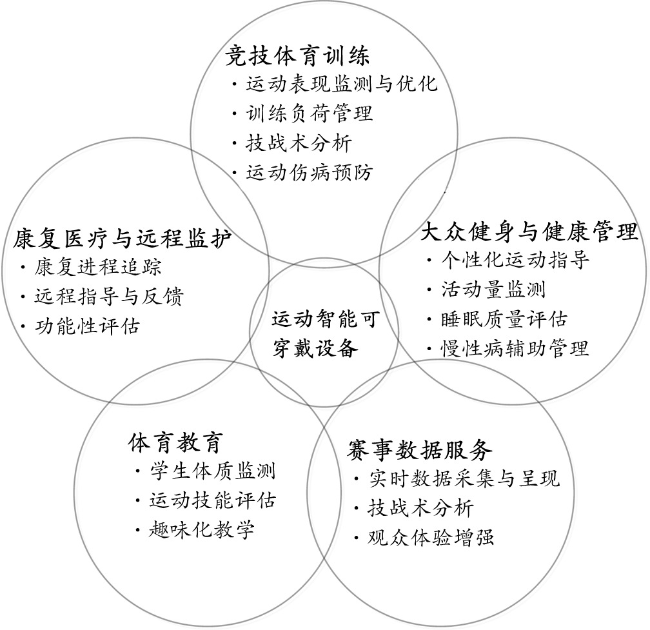
竞技赛事的数据采集与分析方面,在运动智能可穿戴设备也产生了深远影响。多维感知技术能实时采集运动员的生理指标、运动轨迹和技术动作,并进行深度分析,既为教练员提供精准的训练监控和科学管理依据,也为运动员技战术水平的量化评估开辟了新途径[7]。在比赛过程中,运动智能可穿戴设备能实时采集运动员的位置、速度等运动学参数,结合机器学习算法分析团队战术配合和阵型变化,为临场决策提供数据支持[62]。同时,人工智能对海量比赛数据的挖掘,有助于识别对手战术特征,为赛前部署提供依据[10]。总之,数据驱动的决策体系推动了竞技体育的精准化、科学化发展,而商业智能与分析的应用进一步增强了运动组织、团队和个人的竞争优势。
在体育教育领域,运动智能可穿戴设备同样展现出巨大潜力。其有助于教师量化评估学生的体能水平与课堂参与度,通过游戏化的互动方式激发学生的学习兴趣,并提供基础的动作指导,从而提升教学的质量以及增强教学的趣味性,这也是运动智能可穿戴设备的重要应用场景之一。
5 关键技术难点与挑战
尽管运动智能可穿戴设备具有巨大的应用潜力,但其大规模地应用仍面临多个关键技术难点与挑战。
6 结束语
运动智能可穿戴设备作为智慧体育发展的关键引擎,正深刻重塑着传统的运动训练、健康管理与体育教育模式。尽管新一代信息技术已在传感精度、数据处理与人工智能方面有了显著突破,为运动训练科学化与健康服务精准化奠定了基础,但其发展仍面临技术成熟度、用户体验及数据安全的瓶颈。特别是数据采集的精度与丰度不足、传输过程中存在的隐私信息安全风险,是制约其在专业领域广泛应用的核心挑战。展望未来,破局的关键在于通过产学研用的协同创新,在核心技术(如新材料、AI算法)、行业标准体系构建及应用生态上取得突破。随着5G/6G、人工智能等前沿技术的深度融合,运动智能可穿戴设备必将在功能集成与智能化水平上实现革命性跃升,这将不仅为竞技体育带来深刻变革,更将为全民健康事业注入强大动力。